skip to main |
skip to sidebar
 The new chicks have arrived! We ordered some in late winter, but the Buckeye breed weren't available until now. This is an American breed developed by a woman in Ohio. They sound great and demand is high. We also got some buff
Wyandottes as we have had good luck with Wyandottes in the past. Often we have enough hatch here so we don't buy chicks, but periodically it is nice to add some new breed that has qualities that we are looking for - good foraging, good moms, good cold tolerance and so on.

I picked up the peepers at the post office and although the weather is warm, they headed straight for the light to get warmer. Ken took each one and made sure it knew how to get a drink and placed them in their new home. Soon we will move them up to a bigger space! They grow fast.

Greetings from the Garden! This week's box has tomatoes, cucumbers, summer squash, carrots, Roman cutting lettuce, kale, Brussels Sprouts, basil, parsley, and corn.
Field Notes. After four years of drought, it is great to see the irrigation pond and other water levels rising. The heavy rains are tough on the tender plants and splash up dirt, but that is a small price for water levels to come back to usual levels.
Ken continues to cultivate, weed, harvest and plant more fall crops.
From the kitchen. This week we have Brussels sprouts. Check out last week's original blog entry for cooking ideas. We also have kale, a versatile, nutritious member of the cabbage family. We only cook kale for thirty seconds or place in a bowl and pour hot soup over the kale. I cook carrots, add kale, stir to wilt, drain cooking water, add dressing, and serve. I have heard many people talk about baking kale for chips, but do not have a recipe. If anyone does, please give it to me so I can share it.
 We had a couple changes from the newsletter to this box. Each Sunday we walk the garden and field and estimate what will be in its prime to harvest on Wednesday.
Some crops grow at unexpected rates. This week the cauliflower did not look close to harvest Sunday, but was in its prime Wednesday. And in the heat, the cilantro began to bolt - send up a flower stalk. After the cilantro flowers it loses its punch.
And since we have had requests for a newsletter ahead of harvest so people can plan their weekly menu, I get the newsletter out before we harvest. We harvest the same day you get your box. We do not harvest into a cooler and take vegetables out of a cooler to pack into your box; your vegetables were in the soil at 7 a.m. and rinsed as picked to chill and clean them.
Last winter Ken read that spinach loses nearly all its nutrition eight days after harvest. WE are committed to getting vegetables from soil to you in as little time as possible so you can have optimum nutrition and flavor. We hope that makes up for any discrepancy in the newsletter.
And now for some cauliflower and cilantro ideas -
Cauliflower is a member of the brassica or cabbage family - high in vitamins A, C and E and several minerals. Cauliflower is versatile - good raw to preserve vitamins C and E or cooked as you would broccoli. I often cook millet and cauliflower separately and then run both together through a food mill for a delicious alternative to mashed potatoes. Great for people who want to eat fewer potatoes - some diabetics and people with arthritis. Cauliflower is great in quiche, cream soups, curry dishes, and even pickled. We add turmeric when pickling as cauliflower alone will turn a bit grey and less appetizing than a golden color from the turmeric.
Cilantro is a great herb found in Asian and Hispanic cooking. Cilantro is also used by many alternative health care practitioners to assist in elimination of heavy metals from the body. It is usually in salsa - and you have the peppers, green onions, and tomatoes in this week's box. Or whip up a stir fry and add the cilantro just before serving.

Greetings from the Garden! This week's box contains lettuce, Romaine cutting lettuce, red cabbage, kohlrabi, cucumbers, summer squash, green onions, basil, parsley, and the start of tomatoes, apples, Brussels sprouts, and corn.
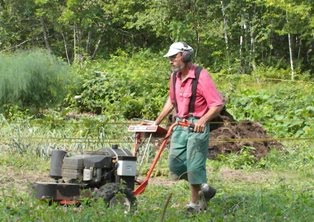
Field Notes. Ken has been grateful - each time he has said, "If it doesn't rain tomorrow, I will need to irrigate.." we get rain! This year with the rain, weeds are really growing well. Ken has been focusing on cultivating and pulling weeds - harvesting the volunteer green manure he calls it. Here is a photo of Ken mowing the fence line.
From the Kitchen. New vegetables this week and fruit. These early apples are wonderful quartered, cored and poached in water or apple with a little cinnamon. We grow several varieties of apples - ones for apple sauce, ones for poaching, ones for storage and so forth. Some years one or some or all varieties do well.
Brussels sprouts are another member of the brassica family like cabbage or broccoli. I like Brussels sprouts steamed lightly with a bit of butter, salt and pepper. Last year a friend pickled some, and that was delicious! Kohlrabi, another member of the brassica family was bred for its swollen stem. Kohlrabi always look rather foreign - like a space ship, but the stem is great peeled, sliced and salted. The green tops can be used in any cabbage or greens recipe. The brassicas are also called crucifers as their early leaves make a cross. They are all known to be great anti-oxidants.
These tomatoes have hairline cracks as a result of the latest downpour. The skin split. Just rinse and cut any soft spots. Rose, a popular variety, seems particularly prone to splitting this year. I like to make tomato salad by cutting tomatoes into wedges, adding some minced onion or garlic, thinly sliced basil and parsley, and add balsamic vinegar and olive oil as a dressing. Last week I also tried homemade mayonnaise, and that was delicious.

Greetings from the Garden! This week's box has red cabbage,red leaf lettuce, Roman cutting lettuce, chard, beans, cucumbers, summer squash, carrots, golden beets, peppers, basil and anise hyssop.
Field Notes. Ken has been cultivating, clearing out areas and planting more crops. Both of us are picking every other day - Ken is picking summer squash, cucumbers and I am picking beans.
The rain has been wonderful.We had a strong wind before the last rain, so Ken has been standing up various plants after all the wind left corn and peppers leaning.
From the Kitchen. We have been enjoying cabbage - in salads, steamed, in stir fry. And the red cabbage is wonderful cooked as a sweet sour side dish. Saute some onion, add cabbage, a bit of honey and some vinegar or lemon juice. Acidic vinegar or lemon juice will renew the cabbage's red color.
Roman cutting lettuce is wonderful with a Caesar or blue cheese dressing. It is a robust green and I dress it accordingly.
Chard is in the beet family - beet tops and chard are wonderful, healthy greens - high in vitamins A, C, and E and iron and calcium - more easily absorbed in these vegetables than their cousin spinach. Spinach contains oxalic acid that binds minerals to make them less accessible to the body. I like to add chard and beet tops to egg and cheese dishes.
Anise hyssop is a licorice flavored herb - very sweet and wonderful dried in winter teas. I also add chopped leaves as garnish to dishes just before serving. If you like fennel, caraway or licorice, you will like anise hyssop.
'Til Next Week, Judith and Ken

As the second crop of bush beans wanes, the pole beans are starting to produce. One heirloom variety we grow is scarlet runner beans. They have beautiful red flowers that attract humming birds and bees. Ken plants flowers for bees and we try to have continuous bloom for them.
Bees pollinate several crops - peas, beans, tomatoes, peppers, eggplant, squash and melons for example. The biodynamic planting calendar divides vegetables into three basic groups - leaf like lettuce or kale, roots like carrots or beets, and fruit like squash and beans. The vegetables in the fruit category need pollinators. We are fortunate to have all the honey bees and wild bees that we have. A farmer friend and his staff are using paint brushes to pollinate crops this season - no bees.
This year the purple coneflowers and scarlet runner beans are next to each other. What a beautiful color combination!


Many people are wondering were are the tomatoes. Well, they are no longer grass green, and a few are starting to look red! Those wonderful, cool nights - great for sleeping - mean the heat loving vegetables are slower to ripen: the tomatoes, peppers, and eggplant. But they are coming, and they are worth the wait!
 The new chicks have arrived! We ordered some in late winter, but the Buckeye breed weren't available until now. This is an American breed developed by a woman in Ohio. They sound great and demand is high. We also got some buff